Migration HQ
Supabase · Vercel Internal team toolThe board a migration team actually runs on — and it will not let you close a project without writing down what went wrong.
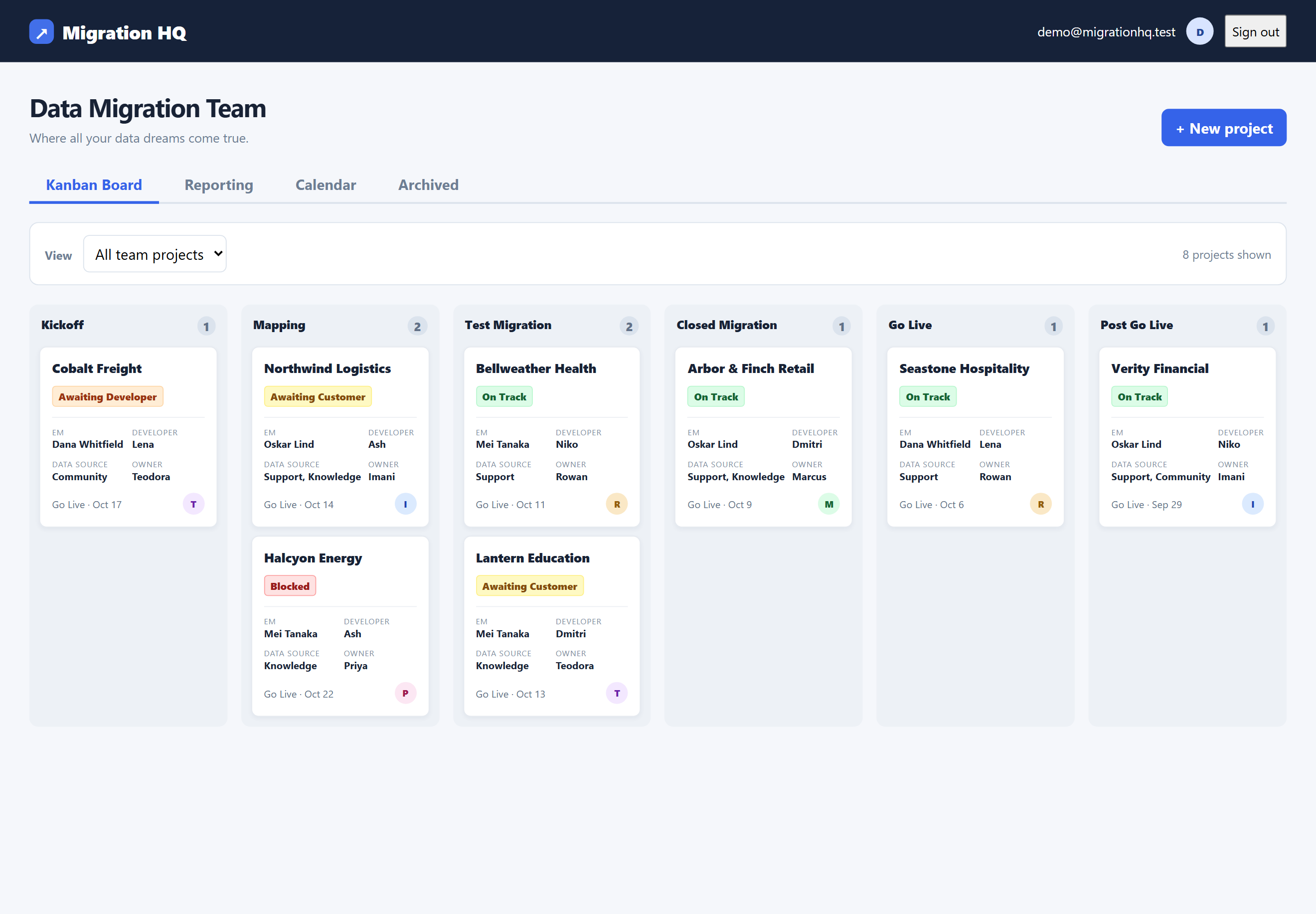
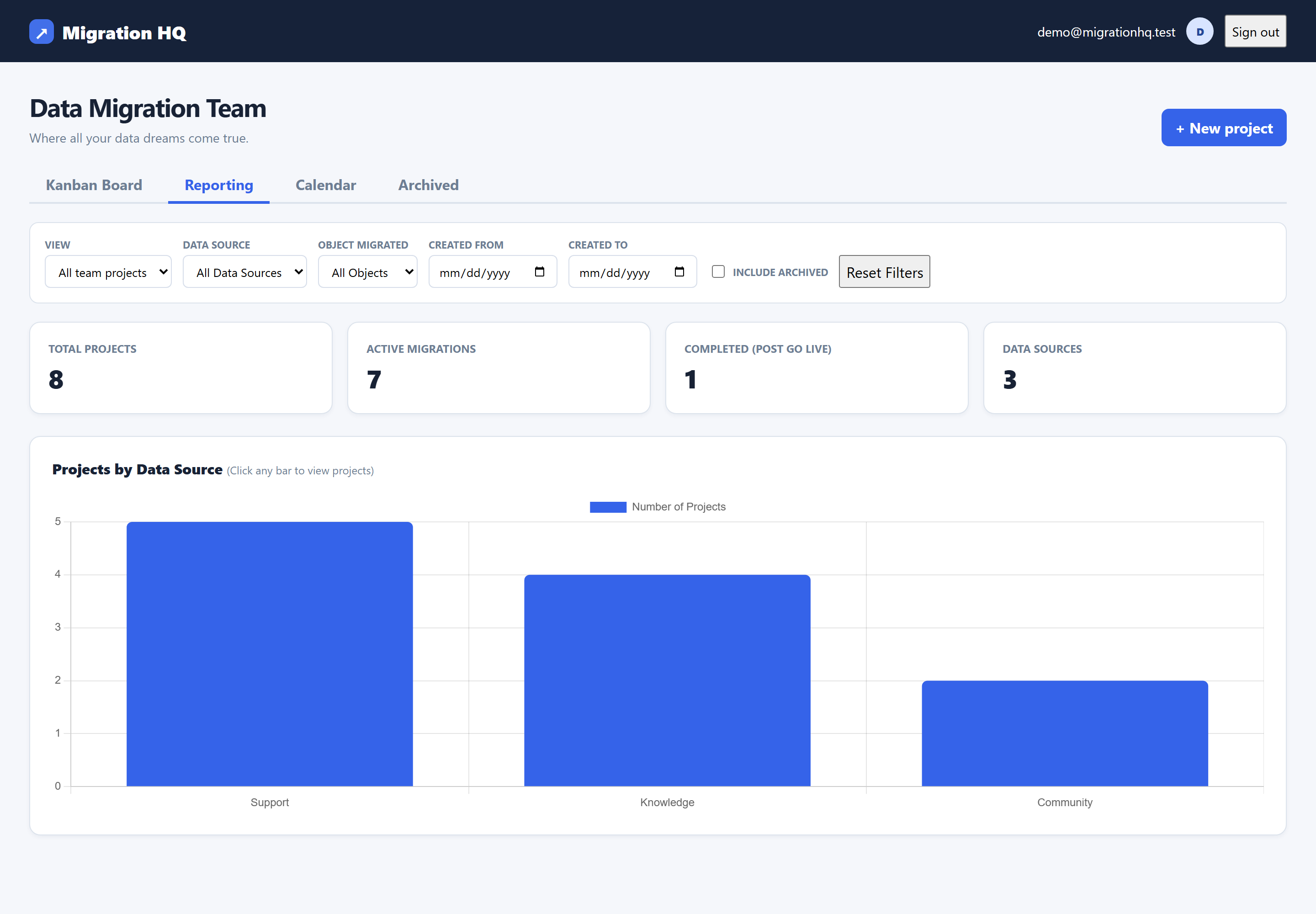
Screens captured against a local demo database — every company, person and date shown is invented. The production board holds live customer migrations.
A single-file static client on Supabase, deployed to Vercel with no build step. Every migration is a card on a board: engagement manager, developer and owner, the data source and objects in scope, and the four dates that actually matter — mapping signoff, test migration, closed migration, go live. Cards drag between groups, and the board filters by source, object, created-date range and whether it's yours or the team's.
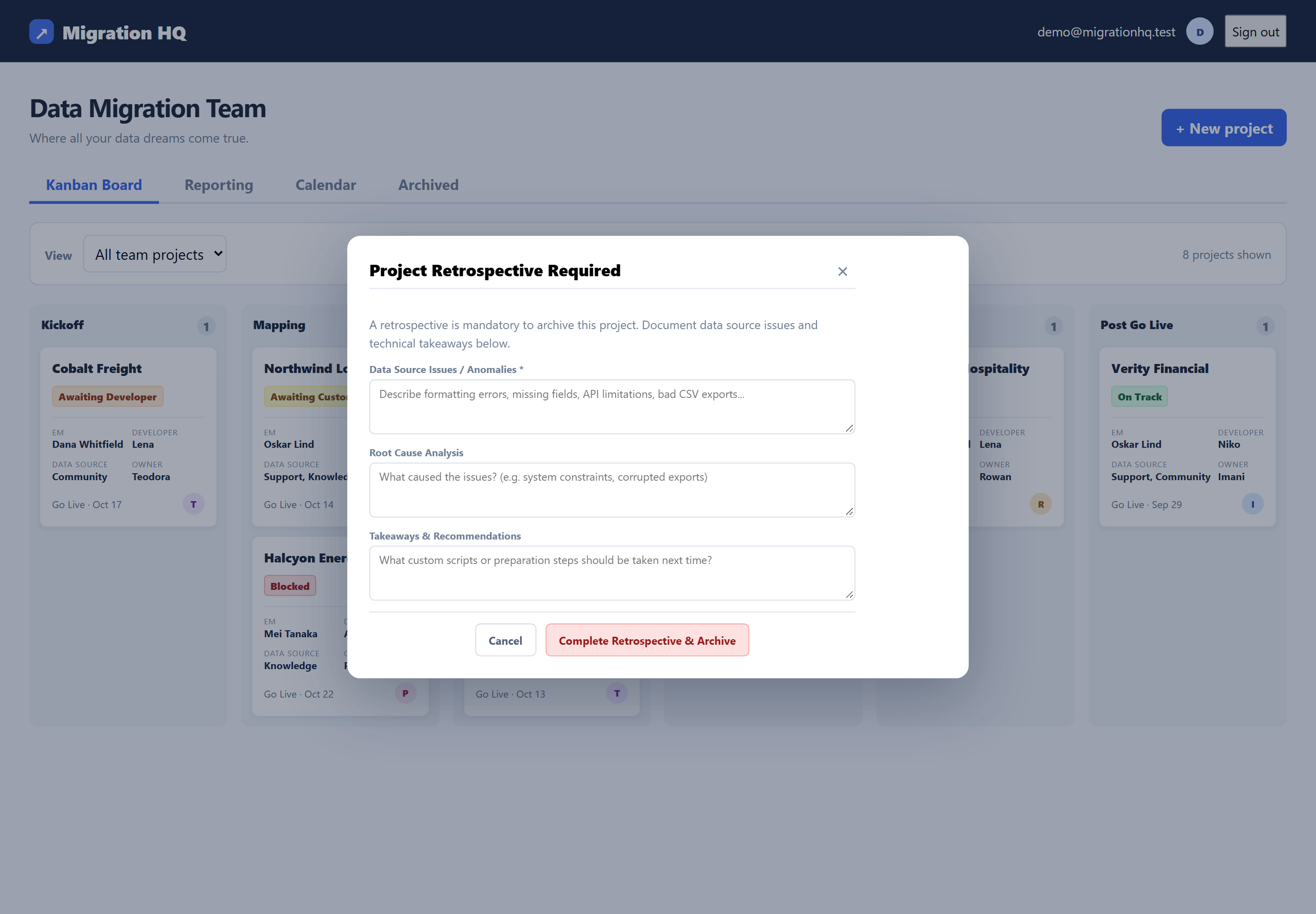
The feature it exists for is the one at the end. Archiving a project opens a retrospective you cannot skip: the data-source issues and anomalies field is required, with root cause analysis and recommendations beside it. The button says "Complete Retrospective & Archive" because that is the only way a project leaves the board.
Its placeholder text is the giveaway that a practitioner wrote it — formatting errors, missing fields, API limitations, bad CSV exports. Those are the four things that cost you a week, every time.
- Institutional memory as structured data. Every closed migration leaves behind a searchable record of what broke and why, so the same anomaly stops costing a different engineer the same week.
- Phases with owners and dates — "where is it?" has an answer without a status call.
- Security by policy, not by secrecy. The anon key is deliberately client-visible; every access rule lives in Postgres row-level security, with magic-link auth and no password to leak.
- No build step. One HTML file, a CDN client library and a schema — the right weight for a tool a small team maintains itself.
HTML, CSS & JS in one file 100%